

Table of Contents
- Why Coffee Beans Go Stale: The Four Enemies
- Step 1: Store Whole Beans in an Airtight Container
- Step 2: Keep Beans Cool, Dark, and Away From Heat
- Step 3: Should You Refrigerate Coffee Beans?
- Step 4: Grind Just Before Brewing
- How Long Do Whole Coffee Beans Last?
- Coffee Bean Storage Mistakes to Avoid
- Freezing Coffee Beans: A Practical Guide
- Frequently Asked Questions
Last Updated: October 19, 2026
Why Coffee Beans Go Stale: The Four Enemies
Learning how to keep coffee beans fresh starts with understanding what you are fighting, and the goal is coffee beans fresh for as long as possible. Coffee beans go stale because of four enemies: oxygen, heat, light, and moisture. Each one speeds up the loss of flavor and aroma.
Fresh coffee tastes bright and smells rich. Stale coffee tastes flat, papery, or dull. The gap between the two comes down to how you store the beans.
Here is what each enemy does:
- Oxygen pulls aroma out of the beans and turns the oils rancid.
- Heat speeds up that decline, so a warm spot ages beans faster.
- Light breaks down the compounds that give coffee its flavor.
- Moisture invites mold and destroys the structure of the bean.
Protect the beans from all four and you preserve freshness far longer. Skip one, and the others still win. That is the whole game in a single sentence.
Step 1: Store Whole Beans in an Airtight Container
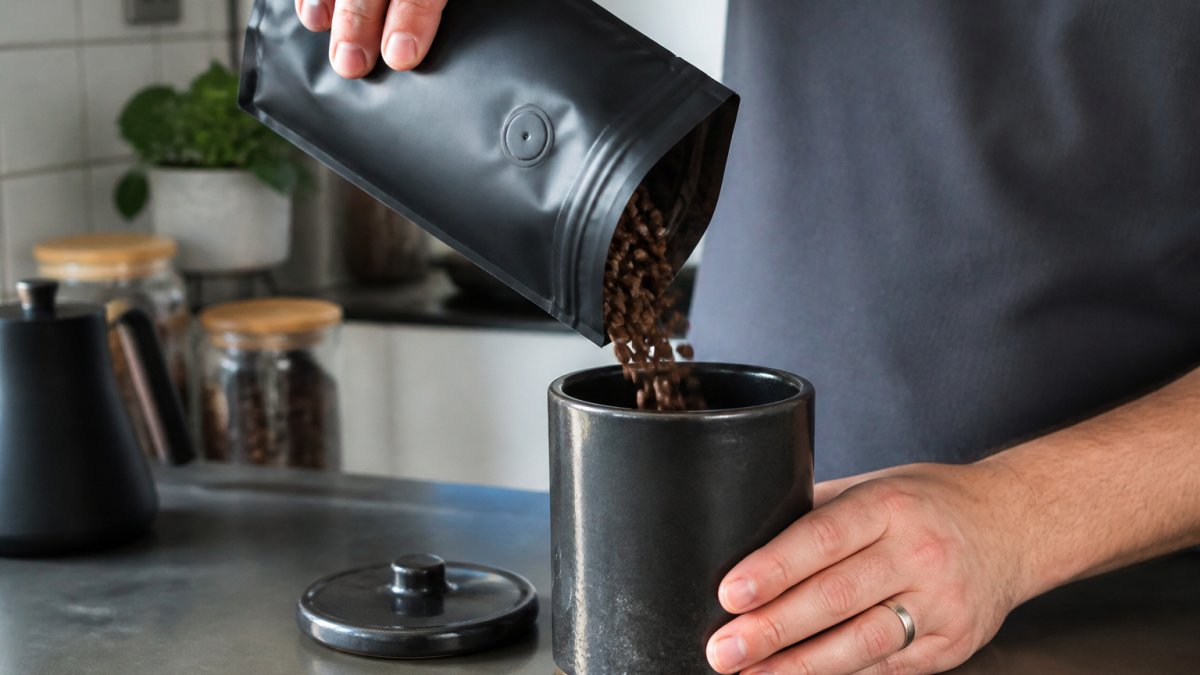
The single best move is to store whole beans in an airtight container. Air is the fastest route to stale coffee, and a sealed container cuts off that exposure. But not all airtight containers are equal, and the details matter more than the label on the box.
A common mistake is leaving beans in the bag they came in, loosely folded. That bag lets air in every time you open it. A proper container seals tight and keeps oxygen away between brews.
What Makes the Best Container for Coffee Beans
The best container for coffee beans blocks air and light, holds a tight seal, and fits the amount of coffee you actually buy. Here is how to judge the options:
- Seal type: A rubber gasket or a clamp lid creates a barrier that a simple screw-top jar cannot match. Test the seal by closing the empty container and trying to lift the lid gently; if it moves, air will get in.
- Opacity: Clear glass and plastic let light through. Choose opaque ceramic, stainless steel, or dark-tinted glass, or keep a clear container inside a closed cupboard.
- One-way valve: If you use the original bag, look for a one-way valve. It lets carbon dioxide escape after roasting without letting oxygen in. Most specialty coffee bags include one; resealable zipper bags without a valve are a compromise, not a solution.
- Capacity: Pick a container that holds your usual purchase with little empty space. A half-empty large canister means more air around the beans every time you open it. If you buy in bulk, use several smaller containers rather than one large one.
- Ease of use: A container you dread opening will stay closed while your beans sit in the bag. Wide-mouth openings, stackable shapes, and lids that seal with one motion all encourage good habits.
Ceramic, dark glass, and stainless steel all work well. Skip anything that lets light through and sits in the open. Avoid decorative containers with loose-fitting lids, and be wary of containers that claim to be airtight without a gasket or clamp.
We recommend buying whole beans in amounts you will finish within a few weeks. Our freshly roasted blends arrive sealed and ready to move straight into your canister. Start with a Cascades Blend for an easy everyday cup.

Step 2: Keep Beans Cool, Dark, and Away From Heat
Store coffee in a cool, dark place at a steady room temperature. The cupboard away from the stove is ideal. Heat speeds up staling, and light breaks down flavor, so keep beans out of both.
Avoid these spots:
- On top of the fridge, where warmth rises
- Next to the oven or a sunny window
- In a car or a hot garage
A pantry or a closed cupboard hits the mark. Keep the temperature steady. Big swings in warmth do more harm than a slightly warm but stable spot.
Step 3: Should You Refrigerate Coffee Beans?
No, you should not refrigerate coffee beans for daily use. The fridge is cold and damp, and every time you open the container, moisture condenses on the beans. That moisture is one of the four enemies.
The fridge also carries strong food smells, and coffee absorbs them. Your beans can pick up the aroma of last night's leftovers. That is not the flavor profile anyone wants.
There is one exception: the freezer. We cover that in its own section below, because freezing works well when you do it right.
Step 4: Grind Just Before Brewing
Grind your beans just before you brew. Whole beans hold their freshness far longer than ground coffee, because the protective surface stays intact. Once you grind, the surface area jumps and the beans start losing aroma within minutes.
This is the part most people skip. Pre-ground coffee is convenient, but it trades freshness for speed. If you want the best cup, buy whole beans and grind them right before brewing.
A simple routine:
- Measure whole beans for your brew.
- Grind them to the right size for your method.
- Brew right away.
The difference is easy to taste. Fresh-ground coffee smells alive. Pre-ground coffee that has sat for days smells flat. A burr grinder gives you the most even grind, but any grinder beats stale pre-ground coffee.
How Long Do Whole Coffee Beans Last?
Whole coffee beans last about two to four weeks at peak freshness after the roast date. After that, they are still safe to drink, but the flavor fades. Ground coffee goes stale much faster, often within days.
The roast date on the bag tells you more than a "best by" date. A recent roast date means fresher beans. Buy from roasters who print it clearly.
How to tell when beans have gone stale:
- Smell: fresh beans smell rich and sweet; stale beans smell flat or papery.
- Look: a dull, dry surface with little oil can signal age.
- Taste: a cup that tastes weak or cardboard-like has lost its edge.
Store beans in a cool, dark place and finish them within a few weeks for the best results.
Coffee Bean Storage Mistakes to Avoid
Most coffee bean storage mistakes come down to letting one of the four enemies in. Fix these and your beans stay fresh far longer.
- Leaving beans in an open bag. Air gets in every time. Move them to an airtight container.
- Storing in the fridge. Moisture and food odors ruin the flavor.
- Keeping beans in sunlight. Light breaks down flavor compounds. Use a dark spot.
- Buying pre-ground coffee. It stales fast. Buy whole beans and grind fresh.
- Storing near heat. The stove and the top of the fridge both speed up staling.
- Buying more than you can use. Beans fade over time. Match your purchase to your pace.
Our Valley Roast and Mountain Roast both work well for a steady everyday routine. Buy what you will finish, and store it right.


Freezing Coffee Beans: A Practical Guide
Freezing coffee beans works well for longer storage, if you seal them tight first. The freezer slows staling and keeps beans fresh for months. The catch is moisture, so seal the beans completely before they go in. But freezing is not a blanket solution, and the difference between good and bad results comes down to a few specific habits.
When Freezing Helps and When It Hurts
Freezing is a good fit when you buy in bulk, order online in large bags, or want to keep a special roast for later. It is a poor fit for the bag you are currently brewing from, because every time you open the container, moisture condenses on the cold beans. A common pattern is to keep a small working portion in your cupboard and freeze the rest.
How to Freeze Coffee Beans the Right Way
- Portion before freezing. Divide beans into amounts you will use in a week or two. A common approach is to freeze in single-bag portions rather than one large container, so you only thaw what you need.
- Seal each portion tightly. Use an airtight bag or container, pressing out as much air as possible. If you use bags, double-bagging adds a barrier against freezer odors and moisture.
- Label each one with the roast date. Frozen beans still age, just more slowly. The roast date tells you how much time you have.
- Freeze them, and take out one portion at a time. Avoid thawing and refreezing, because each cycle adds moisture and degrades flavor.
- Let the portion come to room temperature before grinding. Leave the sealed portion on the counter for 15 to 30 minutes. Opening it while still cold invites condensation on the beans.
The Condensation Problem
Condensation is the main risk in freezing. When cold beans meet warm air, moisture forms on the surface. That moisture is one of the four enemies, and it can undo the benefits of freezing. The fix is simple: keep beans sealed until they reach room temperature, and never thaw a portion in the microwave or in warm water.
This method suits people who buy in bulk or order online. A Smooth Coffee portion frozen in a sealed bag keeps its mellow character for later. Just seal it well and skip the fridge entirely.
Frequently Asked Questions
Do coffee beans keep better in the fridge?
A refrigerator is usually a poor choice for daily-use coffee beans. Every time you open the door, the beans meet warm, humid air, and condensation forms on their surface. That moisture accelerates staling and can dull the flavor. A cool, dark cupboard at room temperature in an airtight container is the better default. Reserve the freezer for longer-term storage, and only if you seal the beans properly and let them come to room temperature before brewing.
How long do whole coffee beans last once opened?
Whole beans hold their best flavor for roughly two to four weeks after the roast date, and they stay drinkable for a few weeks beyond that. Once the bag is opened, oxygen starts working immediately, so freshness declines faster. Buy in quantities you will finish within a month, keep the beans in an airtight container, and check the roast date rather than a vague best-before stamp. Grinding just before brewing preserves far more aroma than any storage trick.
Is it better to buy whole-bean coffee or pre-ground coffee for freshness?
Whole beans stay fresh noticeably longer. Ground coffee exposes far more surface area to oxygen, so it loses aroma within days rather than weeks. If you own a grinder, buy whole beans and grind just before brewing. If you do not, buy smaller bags of pre-ground coffee and reseal them tightly after each use. Either way, an airtight container in a cool, dark place does most of the work.
Can you freeze coffee beans without affecting their flavor?
Freezing works well if you do it carefully. Portion beans into small, airtight bags or containers, press out the air, and freeze them once. Take out only what you need and let the beans thaw fully before grinding, so condensation forms on the container rather than the beans. Avoid repeated freeze-thaw cycles, which introduce moisture and flatten the flavor. Done this way, frozen beans can stay enjoyable for several months.