

Table of Contents
- Why Some Coffee Beans Taste Better Than Others
- How to Choose Coffee Beans: A Practical Checklist
- The Coffee Bean Roast Date Is Your Best Freshness Signal
- Arabica vs Robusta: What the Variety Tells You
- Defects, Grading, and Specialty Coffee Standards
- Fair Trade Coffee Beans, Traceability, and Ethical Sourcing
- How Processing and Harvest Affect Cup Quality
- Packaging and Storage Indicators That Protect Freshness
- Frequently Asked Questions
Last Updated: October 21, 2026
Why Some Coffee Beans Taste Better Than Others
Great coffee is not an accident of price. It is the result of deliberate choices made long before the bag reaches your kitchen. The signs of high quality coffee beans are readable, and once you know what to look for, a mediocre bag becomes obvious in seconds.
The single most important insight is this: quality and personal preference are two different things. A bean can be objectively well-grown, well-roasted, and well-stored, yet still not suit your taste. Learn to judge quality first, then match it to your palate.
How to Choose Coffee Beans: A Practical Checklist
Learning how to choose coffee beans starts with a repeatable routine, not a single glance at the label. Run this checklist every time you buy, and you'll rarely be disappointed.
- Check the roast date, not the expiry date. A printed "best by" tells you nothing useful. You want the day the beans were roasted.
- Look at the beans themselves. They should be uniform in size and color, with no chips, cracks, or dark oily patches on lighter roasts.
- Smell before you commit. Fresh beans release a clear, layered aroma. Flat or dusty smells mean stale coffee.
- Read the origin. A named growing region tells you more than a vague "house blend" with no detail.
- Note the variety. Arabica or Robusta, or a stated blend of both, shapes the cup before you ever brew it.
- Ask about processing. Washed, natural, and honey processing all change flavor in predictable ways.
- Confirm the packaging. A one-way degassing valve and an opaque bag protect freshness better than a clear tub.
The Visual and Sensory Quality Check
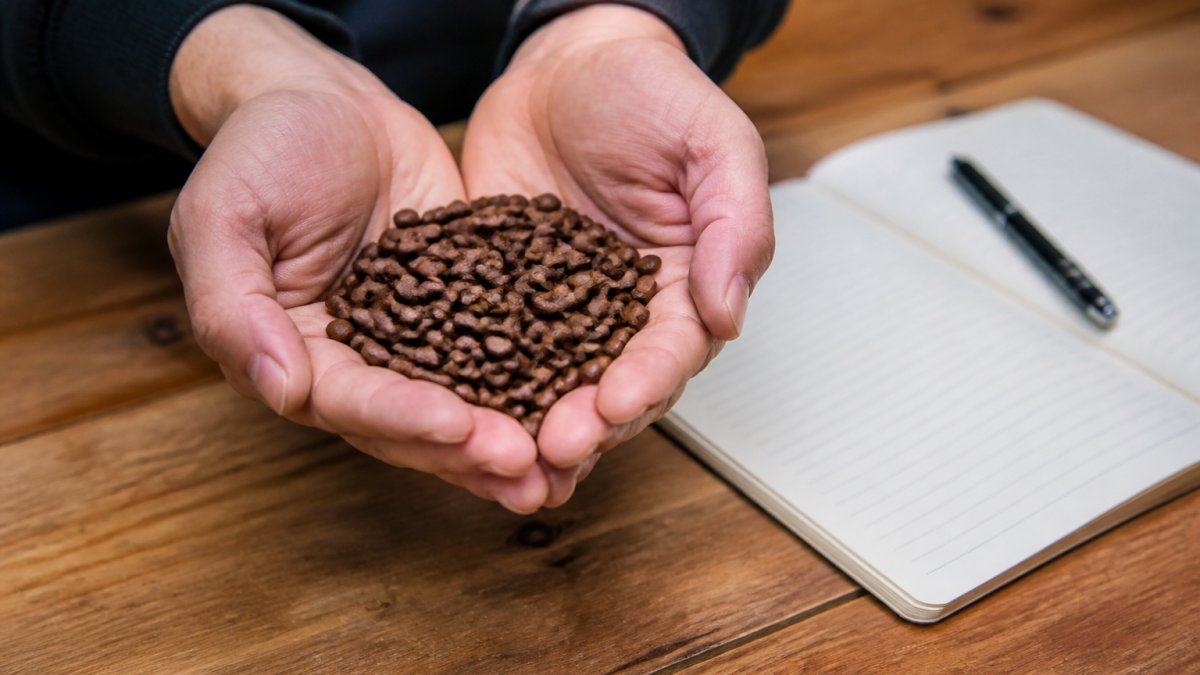
Bean uniformity is the fastest visual test of quality. Well-sorted beans share a consistent size and color, which signals careful grading at the source. Defective beans, by contrast, show up as broken, blackened, or shriveled pieces. A scatter of these in the bag points to lower sorting standards. On the sensory side, crush a single bean between your fingers and smell it: fresh coffee should offer a clean, sweet, or fruity aroma, never a rubbery or cardboard note.
The Coffee Bean Roast Date Is Your Best Freshness Signal
The coffee bean roast date is the most reliable freshness indicator on any package, and it is the one number worth hunting for. Coffee is a perishable agricultural product, not a shelf-stable grocery. Once roasted, beans begin releasing gases and slowly losing the aromatic compounds that make a cup taste alive.
Roast level also plays a role. Light roast beans keep more of the bean's origin character, with brighter acidity and clearer fruit or floral notes. Medium roast balances that brightness with sweetness and body, which is why it suits so many brewing methods. Dark roast pushes toward deeper, bittersweet, chocolatey flavors as the roast character takes over.
Arabica vs Robusta: What the Variety Tells You
The Arabica vs Robusta distinction explains much of what you taste before you even brew. Arabica beans are grown at higher altitudes and tend to be sweeter, more acidic, and more complex, with the fruity and floral notes many enthusiasts prize. Robusta beans are hardier, higher in caffeine, and heavier in body, often with earthy or nutty tones.
Neither variety is inherently superior. A well-grown Robusta can be excellent, and a poorly handled Arabica can taste dull. What the variety tells you is the likely shape of the cup, which helps you match beans to your taste preference and brewing method.
Defects, Grading, and Specialty Coffee Standards
Grading is where quality stops being a matter of opinion. Coffee is assessed for defects such as broken beans, insect damage, and improper fermentation, and higher grades permit fewer of them. Specialty coffee refers to beans that meet stricter grading and traceability standards, typically sourced with care and roasted to highlight their character.
To read those claims like a buyer, it helps to know what graders actually look for. In plain language, common defects fall into a few families:
- Physical damage: broken, chipped, or crushed beans, which can roast unevenly and taste flat or ashy.
- Insect damage: small boreholes or chewed edges, often linked to poor storage or handling at origin.
- Fungal or fermentation faults: blackened, sour-smelling, or moldy beans, which can carry musty, medicinal, or rubbery notes into the cup.
- Immature or overripe beans: pale, shriveled, or darkly discolored pieces that signal uneven ripening and inconsistent flavor.
Graders count these defects in a sample and assign a score or grade based on how many are present and how severe they are. The practical takeaway for you is simple: fewer defects means a cleaner, more predictable cup.
What labels and scores do and do not guarantee. A specialty-grade claim tells you the coffee passed a sorting and grading threshold at some point in the supply chain.
Fair Trade Coffee Beans, Traceability, and Ethical Sourcing
Fair trade coffee beans and traceability speak to how the coffee was grown and traded, and they matter to conscious consumers for good reason. Traceability means you can follow a bean back to its farm, cooperative, or region. That transparency tends to correlate with better handling at every stage, from harvest to export.
But ethical sourcing is a claim worth testing, and vague packaging language makes that hard. Here is how to evaluate what you are actually buying:
- Look for specificity. A named farm, cooperative, or washing station tells you more than a country name alone. If a bag says only "Product of Colombia" with no region or producer detail, you have little to verify.
- Check harvest and crop details. Many quality-focused roasters print the harvest year or season. A recent harvest date is a useful freshness signal before roasting even enters the picture.
- Distinguish certifications from direct relationships. Certifications such as Fair Trade or organic are third-party claims with defined standards. Direct-trade language describes a roaster's own relationship with producers. Neither is automatically better, but they mean different things, and a roaster should be able to explain which they use and why.
- Ask what the label does not say. If a bag leans on words like "sustainable" or "ethically sourced" without any supporting detail, treat that as marketing until the roaster can point to specifics.
A roaster who names the farms or cooperatives behind a blend is showing you their work, not just telling you about it. At Midnight Coffee, we source ethically and roast fresh, because that transparency is part of the product.
How Processing and Harvest Affect Cup Quality
Processing changes flavor as much as origin does. Washed processing removes the fruit before drying, producing clean, bright, consistent cups. Natural processing dries the whole fruit around the bean, adding sweetness and heavier fruit character. Honey processing sits between the two, leaving some mucilage for a rounder, sweeter result.
When you compare flavors across two bags from the same region, processing is often the hidden variable. Ask about it, and you'll start predicting what a bean will taste like before you brew it.
Packaging and Storage Indicators That Protect Freshness
Packaging is the last line of defense for freshness, and it's easy to read. A one-way degassing valve lets carbon dioxide escape while keeping oxygen out, and an opaque bag shields beans from light. Clear containers and loose bags accelerate staling.
At home, store whole beans in an airtight, opaque container away from heat and light, and grind just before brewing. Grind size should match your brewing method: coarse for French press, medium for drip, fine for espresso. Pre-ground coffee stales far faster than whole beans, so buy whole whenever you can. Our freshly roasted blends, including the smooth Valley Blend and the rich Mountain Roast, arrive ready to brew.

| Indicator | What Good Looks Like | Why It Matters |
|---|---|---|
| Roast date | Printed, recent | Freshness |
| Bean appearance | Uniform, unbroken | Grading quality |
| Aroma | Sweet, layered | Fresh, defect-free |
| Origin detail | Named region/farm | Traceability |
| Packaging | Valve, opaque bag | Slows staling |
Frequently Asked Questions
Can I still use 2-year-old coffee beans?
You can brew them, but the cup will taste flat, papery, or stale. Coffee loses most of its aromatic oils within weeks of roasting, not years. A two-year-old bean is safe to use but will not show the signs of high quality coffee beans you should expect from a fresh roast. Check the coffee bean roast date before buying, and treat anything older than a few months as a last resort rather than a daily cup.
What is the difference between Arabica and Robusta?
Arabica beans are grown at higher altitudes and tend to taste sweeter, more acidic, and more aromatic, with fruity or floral notes. Robusta beans are hardier, higher in caffeine, and taste earthier and more bitter. Most specialty roasters build blends around Arabica for complexity, sometimes adding Robusta for body and crema. Knowing which variety you are buying helps you predict the flavor profile before you brew.
How can you tell if coffee beans are high quality?
Start with the roast date, then look at the beans themselves. High quality coffee beans are uniform in size and color, free of chips, black spots, and shriveled pieces. They smell sweet and layered rather than dusty or burnt. The bag should list origin, variety, and processing method, and it should have a one-way valve.
Does the price of coffee beans indicate quality?
Price is a rough signal, not a guarantee. Higher prices often reflect specialty-grade beans, single-origin sourcing, or small-batch roasting, but packaging and marketing also inflate cost. A $20 bag with a recent roast date and clear origin information is usually a better buy than a $30 bag with no date. Judge the signs of high quality coffee beans first, then decide whether the price matches what is in the bag.
What should I look for on a coffee bean label?
Look for the roast date, not just a best-by date. Check the origin, the variety (Arabica or Robusta), the processing method (washed, natural, honey), and any fair trade or ethical sourcing certification. A label that names the farm or region shows traceability. If the bag lists only a country and a vague flavor claim, you have less to judge. Clear labeling is one of the simplest signs of high quality coffee beans.
How important is the roast date when buying coffee beans?
It is the single most useful number on the bag. A coffee bean roast date tells you exactly how fresh the beans are, while a best-by date can hide months of shelf time. Buy from roasters who print the roast date, and favor bags roasted within the last two to three weeks.
Are fair trade coffee beans better quality?
Fair trade certification is about how beans are sourced, not a guarantee of cup quality. It signals that farmers were paid a minimum price and worked under certain standards. Quality still depends on variety, harvest, processing, and roast. The best approach is to look for both: fair trade coffee beans with a recent roast date and clear origin information. Ethical sourcing and high quality often go together, but check the other signs too.
The challenge is that most bags hide the very signals that reveal quality. At Midnight Coffee, we put freshness and sourcing front and center: every blend is freshly roasted, ethically sourced, and delivered free to your door, whether you're in Iowa or ordering from Reno. Browse our blends, check the roast date on the bag, and taste the difference that careful sourcing and fresh roasting make in every cup. Shop now and find your next favorite.