

Last Updated: October 30, 2026
Quick Summary
To identify ethically sourced coffee, check for a named certifying body with a license code, a named farm or region, and a printed roast date rather than just a logo. Real certifications are traceable to a specific certifier and producer group, so verify the certifying body against its official registry. A roaster who can name the farm, the importer, and the price the farmer received is giving you evidence, not marketing language.
- Fair Trade focuses on farmer pay and stable pricing, while Rainforest Alliance centers on environmental and labor standards on the farm.
- Direct trade is bought straight from farmers with no certification body in the middle, so the label depends on the roaster's honesty.
- Ask which farm or cooperative grew the coffee, what price the farmer received, and which certifier audited the lot.
- The biggest red flag is a bold ethical claim with no named certifier, no farm, and no importer.
- Pick one bag and try to trace it back to a farm and a certifier to test your roaster.
Table of Contents
- What Ethically Sourced Coffee Actually Means
- Coffee Certification Labels Explained
- How to Spot Fair Trade Coffee Beans on a Label
- Direct Trade vs Fair Trade Coffee: What's the Difference
- Questions That Reveal Transparency in Coffee Supply Chains
- Red Flags That Signal Weak Ethical Claims
- Choosing a Roaster You Can Verify
- Frequently Asked Questions
What Ethically Sourced Coffee Actually Means
The term gets used loosely across the industry, though. A bag can say "ethically sourced" with no proof behind it.
That is the first thing to understand. Ethics in coffee is a claim, and claims need evidence. For a closer look at judging bean quality itself, see this buyer's guide to high quality coffee beans. Below, we'll show you exactly how to read that evidence on a label, in a roaster's answers, and in the supply chain itself.
Coffee Certification Labels Explained
Certification labels are third-party stamps that verify a coffee meets specific social or environmental standards. Each seal covers different ground, so knowing what each one checks matters more than counting logos on a bag.
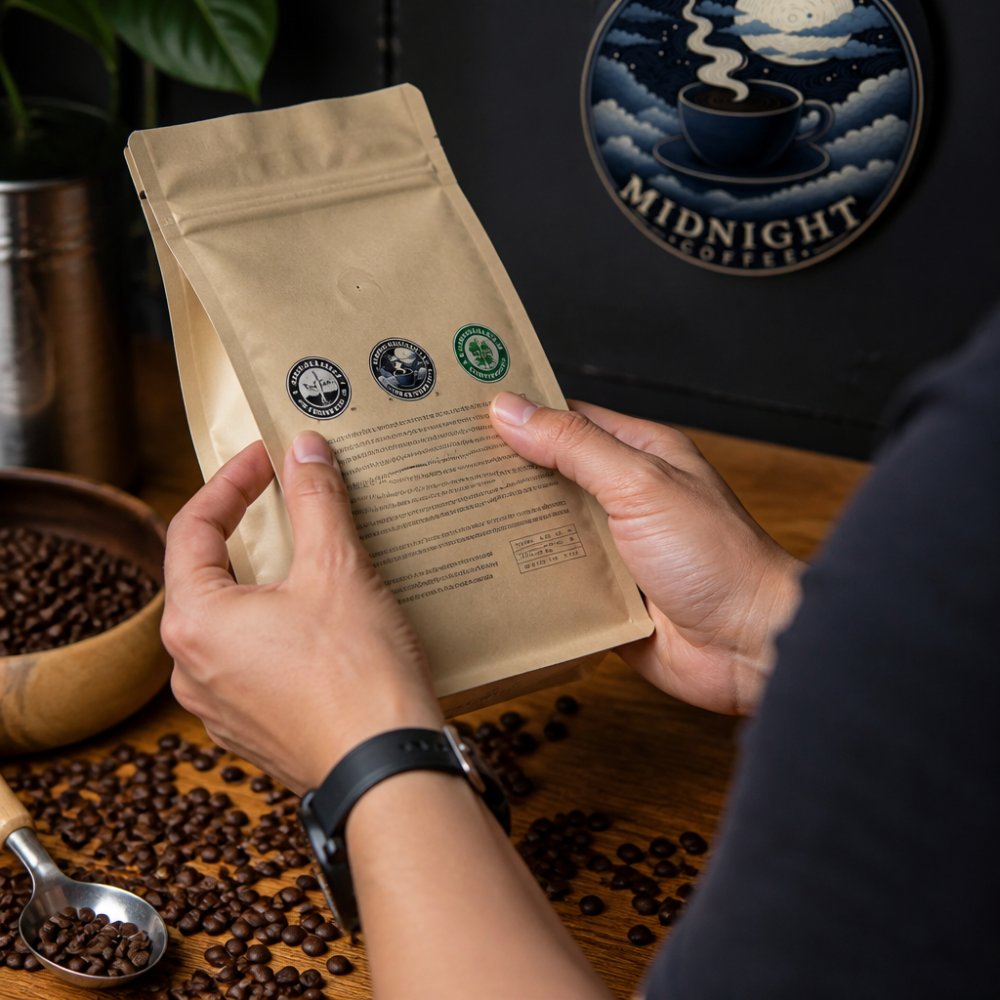
Fair Trade, Rainforest Alliance, and Organic Seals
Fair Trade focuses on farmer pay and stable pricing. Rainforest Alliance centers on environmental and labor standards on the farm (Rainforest Alliance Certification). Organic certification covers how the coffee is grown, without synthetic pesticides or fertilizers.
A bag with all three seals signals a producer that invested in multiple audits. One seal is not a red flag, but it tells you less.
Watch out: some brands print seal-like graphics that are not real certifications. Check the certifying body's name against its official registry before you trust the stamp.
How to Spot Fair Trade Coffee Beans on a Label
To spot genuine fair trade coffee beans, look for the certifying organization's name and license code, not just the logo. Real certifications are traceable to a specific certifier and a specific producer group.
Here is what to check on the back of the bag:
- The full name of the certifying body, not a lookalike design
- A license or producer code you can look up
- The country and region of origin
- The importer or roaster named on the label
- A roast date, not just a best-by date
Direct Trade vs Fair Trade Coffee: What's the Difference
Direct trade coffee is bought straight from farmers without a certification body in the middle. Fair trade coffee uses a third-party certification to set minimum prices and standards. The core difference is who does the verifying.
Direct trade can mean closer relationships and better prices for growers. It can also mean no independent check at all. The label depends entirely on the roaster's honesty.
Fair trade trades some flexibility for outside accountability. To taste what traceable sourcing means in the cup, try a single origin favorites sample pack. Neither model is automatically better. What matters is whether the roaster can show you the receipts, literally and figuratively.
Ask which farms they buy from and when they last visited. A roaster with real direct relationships answers fast and specifically.
Questions That Reveal Transparency in Coffee Supply Chains
Transparency in coffee supply chains means a roaster can name where the beans came from, who grew them, and how they were paid. You can test this with a few direct questions.
Ask these before you buy:
- Which farm or cooperative grew this coffee?
- What price did the farmer receive?
- Which certifier audited this lot, and what is the license code?
- How fresh is this roast, and when was it roasted?
- Can you share the importer's name?
Vague answers are your answer. A roaster who cares will point you to records. If you want to put these questions to a roaster directly, contact the team and see how they respond.
Red Flags That Signal Weak Ethical Claims
The biggest red flag is a bold ethical claim with no named certifier, no farm, and no importer. Marketing language like "responsibly sourced" or "farm friendly" means nothing without a verifiable trail behind it.
Other warning signs:
- No country of origin listed
- A logo that looks like a certification but names no certifying body
- No roast date on the bag
- A brand that dodges questions about farmer pay
- Prices so low the math on fair pay does not work
None of these prove bad practice on their own. Together, they show a roaster who has not done the work to prove good practice.
Choosing a Roaster You Can Verify
The right roaster is one who welcomes verification. Look for named origins, traceable certifications, roast dates, and clear answers to supply chain questions.
At Midnight Coffee, we offer freshly roasted coffee delivered directly to your door. You can browse our coffee blends, and if you find a keeper, our subscription plans make it easy to keep that coffee coming on a regular schedule.
A simple test: pick one bag and try to trace it back to a farm and a certifier. If the roaster makes that easy, you have found a keeper.
| What to Check | Weak Signal | Strong Signal |
|---|---|---|
| Certification | Logo only | Named certifier with code |
| Origin | "Blend of origins" | Named farm or region |
| Freshness | Best-by date only | Roast date printed |
| Farmer pay | No mention | Specific price or program |
| Answers | Vague, slow | Specific, fast, documented |
Frequently Asked Questions
What is the difference between fair trade and ethically sourced coffee?
Fair trade is one certification within the broader category of ethically sourced coffee. A bag can be ethically sourced without carrying a Fair Trade seal if the roaster buys through direct trade relationships or publishes farm-level details. Ethically sourced coffee covers working conditions, fair pay, environmental practice, and traceability. Fair trade certifies specific standards through an auditing body, so treat the seal as one useful signal rather than the only proof of ethical sourcing.
How can you tell if coffee is ethically sourced by looking at the label?
Start with the seals: Fair Trade, Rainforest Alliance, and USDA Organic each require third-party audits. Then look for the origin detail. A label naming the region, cooperative, or farm, plus a harvest date and roast date, shows the roaster knows where the beans came from. A bag that lists only a country, or nothing at all, gives you little to verify. Scan the QR code or website if one is printed, since many roasters publish sourcing notes there.
Is organic coffee always ethically sourced?
No. Organic certification covers how the coffee is grown, including restrictions on synthetic pesticides and fertilisers. It says nothing about wages, labour conditions, or how much of the retail price reaches the farmer. A coffee can be certified organic and still be sourced through an opaque supply chain. Look for organic certification alongside a fair trade or direct trade claim if you want both environmental and social standards covered.
Why is direct trade often considered better than fair trade?
Direct trade means a roaster buys straight from a farm or cooperative, often at prices above the fair trade floor and with longer-term commitments. It can respond faster to quality issues and give farmers more stability. The catch is that direct trade has no universal certifying body, so the claim depends entirely on the roaster's willingness to publish details. Fair trade is audited by an independent third party. The strongest roasters combine both: direct relationships plus published, verifiable information.
Most coffee bags make ethical claims. Far fewer can prove them. That gap is where your buying decision should live.
At Midnight Coffee, we built our sourcing around that proof: ethically sourced beans, roasted fresh, and delivered free to your door. Start with a Rainforest Blend or explore a subscription for regular deliveries. Get started with Midnight Coffee and taste what verified sourcing actually delivers.

