

Last Updated: November 15, 2026
Quick Summary
Small batch coffee is roasted in carefully controlled quantities, usually to order, so beans reach you within days of roasting rather than months. That freshness preserves aroma and flavor, and small batches let the roastmaster adjust each lot and track origin, process and roast date.
- Small batch roasting prioritizes precision, freshness and the character of a specific lot of beans.
- Freshly roasted beans release carbon dioxide for days, so roasters time the rest period to your brew schedule.
- Trust starts with a printed roast date on the bag, not a vague best-by stamp.
- Ignore unverifiable words like artisan, gourmet and premium; check batch size, roast date, origin, process and roast level.
- Store beans airtight, away from light and heat, and buy quantities you will finish within a few weeks.
Table of Contents
- Why Small Batch Coffee Roasters Are Worth the Switch
- Small-Batch vs. Mass-Produced Coffee: What Actually Differs
- The Benefits of Small-Batch Coffee, from Flavor to Sourcing
- How to Choose a Coffee Roaster You Can Trust
- What to Ignore When Comparing Small Batch Coffee Roasters
- Storage and Shelf-Life Practices That Protect Freshly Roasted Beans
- Order a Bag Roasted to Order from Midnight Coffee
- Frequently Asked Questions
Why Small Batch Coffee Roasters Are Worth the Switch
Small batch coffee is roasted in carefully controlled quantities, usually to order, so the beans reach you within days of roasting rather than months. That single difference in timing changes almost everything about what lands in your cup. At Midnight Coffee, we roast to order in small batches and never warehouse finished stock, because freshness is the whole point.
The gap between supermarket coffee and small batch coffee comes down to time, attention and volume. A grocery shelf bag may have been roasted months before you open it.
Below, we'll show you exactly what separates the two, how to judge a roaster before you buy, and which storage habits protect the freshness you paid for.
Small-Batch vs. Mass-Produced Coffee: What Actually Differs
The core difference is scale, and scale dictates how much control a roaster has over every variable. Mass production prioritizes uniformity and shelf stability across enormous volumes. Small batch roasting prioritizes precision, freshness and the character of a specific lot of beans.
A useful way to see the split:
| Factor | Small-Batch Roasting | Mass Production |
|---|---|---|
| Batch size | Small, closely monitored | Very large, continuous |
| Roast date | Recent, often to order | Rarely printed, often months old |
| Roast profile | Adjusted per lot and origin | Fixed for consistency across volume |
| Quality control | Frequent cupping and sampling | Statistical, batch-averaged |
| Bean origin | Often single-origin or traceable | Blended for uniform flavor |
| Shelf life focus | Freshness window | Extended stability |
Batch Size, Thermal Mass, and Roast Consistency
Thermal mass is the heat energy stored in the roaster drum and the bean bed itself. In a small batch, that mass is easier to read and adjust, so the roastmaster can respond to changes in airflow control, bean density and moisture in real time.
Freshness, Degassing, and Shelf Life
Freshly roasted coffee releases carbon dioxide for days after the roast, a process called degassing. This is why a bag roasted yesterday behaves differently from one roasted six weeks ago: the aroma profile is livelier, and the flavor notes read more clearly.
If you want to know how to actually judge freshness at home, our guide on how to tell if coffee beans are fresh walks through the signs to look for.
The Benefits of Small-Batch Coffee, from Flavor to Sourcing
Flavor is the benefit most people notice first, but sourcing is the one that matters most over time. That shorter chain from green coffee beans to your door makes traceability practical. A roaster working at this scale can tell you the origin, the process and often the altitude, because the batch is small enough to track.
What most articles skip is how small-batch roasting connects to ethical sourcing. When a roaster buys a single lot from a named farm or cooperative, they often build a direct relationship with the producer. That relationship usually means paying above commodity price, committing to repeat purchases, and giving the farmer feedback on how the roast performed. The result is a more transparent supply chain and a better incentive for quality at origin. You can taste that in the cup: coffees from relationship-based sourcing tend to have clearer varietal character and fewer defects, because the producer knows the roaster will notice.
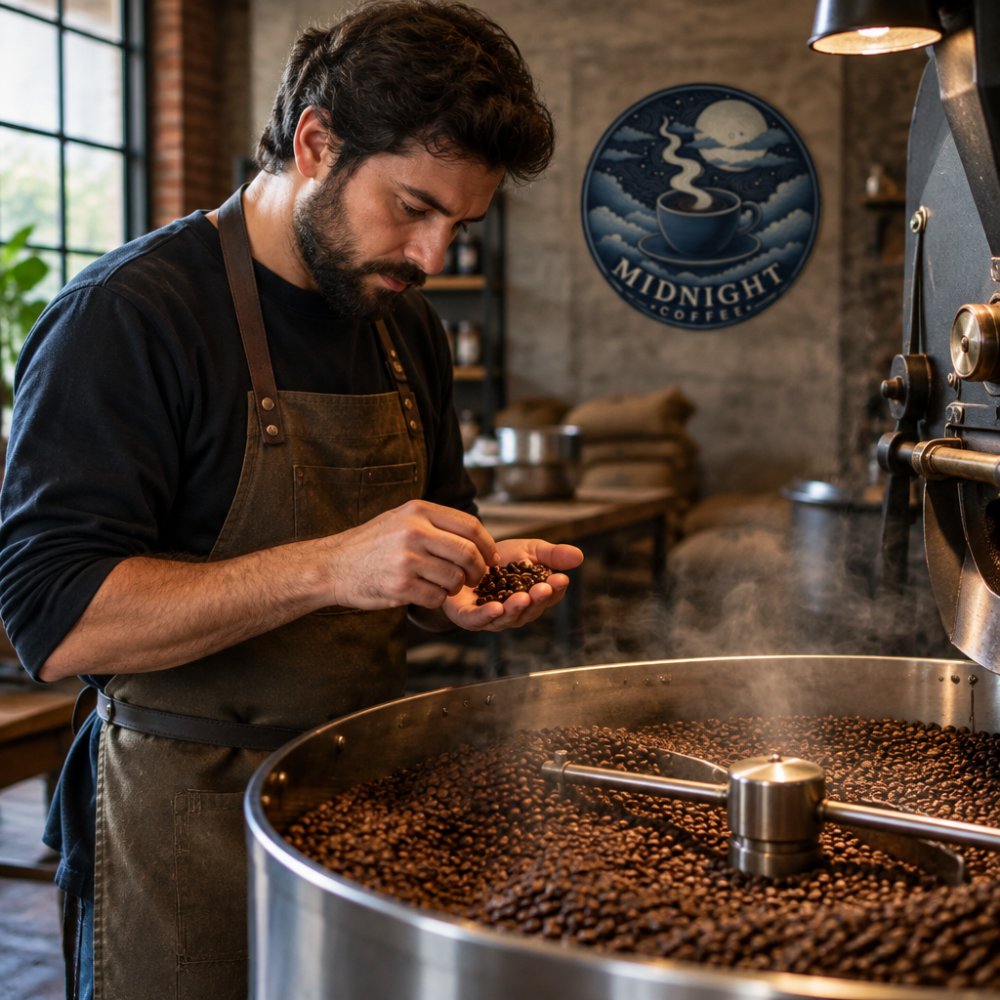
Flavor Complexity and the Roastmaster's Role
This is also where the science of degassing matters. Freshly roasted beans release carbon dioxide for days, and in a small batch the roastmaster can time the rest period so the beans peak when they reach you. In mass production, the bag may sit for months, and the CO2 has long escaped. Small-batch roasters often roast to order precisely so the degassing window aligns with your brew schedule.
Sourcing Transparency You Can Actually Verify
Ask a roaster three questions: Where was this coffee grown? How was it processed? When was it roasted? A small-batch roaster who buys direct can answer all three without checking a spreadsheet. That is the practical test of transparency. If the answer is vague, the sourcing story is probably marketing. For a deeper look at what ethical sourcing looks like on a bag, our guide to identifying ethically sourced coffee beans covers the labels and claims worth trusting.
How to Choose a Coffee Roaster You Can Trust
Trust starts with a printed roast date, not a vague "best by" stamp. A roaster confident in freshness will tell you when the beans were roasted, because that date is the single most useful piece of information on the bag.
Here is the checklist we would use before committing to any roaster:
- Is a roast date printed on the bag, not just a best-by date?
- Is the origin named, down to region or farm where possible?
- Does the roaster describe the process (washed, natural) and roast level?
- Are reviews specific about freshness and delivery speed?
- Is the price clear, including shipping?
- Does the roaster explain how orders are fulfilled and how quickly?
Price and reviews are the two things we would check first. A roaster that publishes clear pricing and lets customers speak for themselves is usually a roaster that has nothing to hide. For a deeper look at judging bean quality before you commit, our buyer's guide to high quality coffee beans covers what to inspect.
What to Ignore When Comparing Small Batch Coffee Roasters
Ignore the word "artisan" on its own. It carries no standard and no verification, so it tells you nothing about batch size, roast date or sourcing. The same goes for "gourmet" and "premium," which are marketing language rather than specifications.
The claims worth your attention are narrow and checkable: batch size, roast date, origin, process and roast level. Everything else is decoration.
Storage and Shelf-Life Practices That Protect Freshly Roasted Beans
Store beans in an airtight container, away from light and heat, and buy in quantities you will finish within a few weeks. Whole bean coffee holds its aroma longer than ground, because grinding exposes far more surface area to oxidation. But the bigger variable is degassing: freshly roasted beans release carbon dioxide for several days, and if you seal them too tightly too soon, the CO2 can build pressure and force aroma compounds out when you open the bag. That is why many small-batch roasters use one-way valve bags, which let CO2 escape while keeping oxygen out.
The practical rule is to let beans rest for a few days after the roast date before brewing, then store them in a container that minimizes oxygen exposure. A simple airtight jar in a cool cupboard works well for short-term storage. For longer storage, freezing is a legitimate option: portion beans into airtight bags, remove as much air as possible, and freeze. Grind from frozen without thawing to preserve aroma. Avoid the refrigerator, which introduces moisture and odors.
Our subscription plans let you match deliveries to how much coffee you drink. Our seven storage rules for keeping coffee beans fresh cover container choice, freezing and the mistakes that flatten flavor fastest.
Watch out: if a bag has no roast date, you cannot know where it sits in the degassing window, and no storage trick will bring back peak flavor.
Order a Bag Roasted to Order from Midnight Coffee
The test of any roaster is simple: order a bag, note the roast date, and taste the difference in the first week. That is the whole argument for small batch coffee, and it is one you can run yourself.
Midnight Coffee roasts to order in small batches, sources ethically, and offers free delivery, so the beans reach you fresh. Our blends are available whole bean or ground, and our subscription plans let you set a delivery rhythm. Browse the coffee lineup and pick a bag roasted to order, or read our guide to identifying ethically sourced coffee beans if sourcing transparency is your priority.
If you are tired of opening a bag and finding flat, dated coffee, the fix is a shorter path from roaster to cup. Midnight Coffee roasts every order after you place it, ships free, and offers a subscription you can pause or cancel anytime. Get started with Midnight Coffee and taste what a fresh roast date actually does for your morning cup.
Frequently Asked Questions
What is considered small batch coffee roasting?
Small batch roasting means a roastery works in limited quantities rather than the continuous high-volume runs used in mass production. The smaller load lets the roastmaster control airflow, heat application, and the roasting curve more precisely, so each batch hits a consistent roast profile. At Midnight Coffee, we roast to order.
Is small batch coffee fresher than mass-produced coffee?
At Midnight Coffee, we roast to order in small batches, so our coffee is roasted for you rather than sitting in storage.
Is small batch coffee worth the price?
Check the price before you buy, and compare it with the coffee you currently drink. Our subscription plans can reduce the cost per delivery.
How can I tell whether a coffee roaster is small-batch?
Look for details about origin, processing method and roast level on the product page. Check the price and read the reviews before you buy.
